The Hidden Cost of Tobacco, Alcohol and Sugary Drinks: The Price We Pay Beyond the Shelf
Looking Beyond the Price Tag to the True Cost of Harmful Products
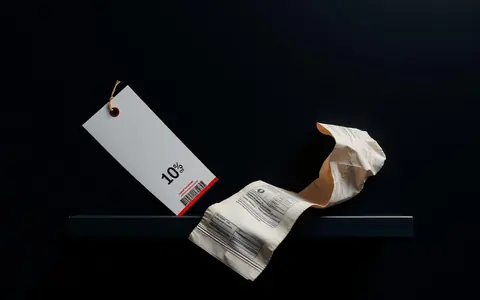
Every product carries two prices. The first is printed on the shelf and settled at the till. The second is paid somewhere else, by someone else, at some later date — and for tobacco, alcohol and sugary drinks the second price dwarfs the first. Economists have a neutral word for this arrangement: externality. In ordinary language, it means the seller keeps the profit and the country keeps the bill.
Consider what that bill actually contains. There is the direct cost of care: the oncology beds, the amputations, the emergency admissions after a Friday night, the insulin supplied month after month for decades. There is the indirect cost of lost production: the days not worked, the skills lost to early death, the businesses that close when their founder falls ill. There is the cost carried by people who never bought the product at all — the passenger killed by a drunk driver, the child breathing secondhand smoke in a one-room home, the wife managing a household on an income spent before it reaches her.
And there is a category we almost never count: the caring. When a family member falls chronically ill, someone must look after them, and in Zambia that someone is usually a woman, usually unpaid, and usually withdrawing from work or school to do it. Her lost earnings appear in no ledger. They are nonetheless real, and they compound over years.
The price on the shelf is only the deposit. The rest of the bill arrives years later, and the whole country signs for it.
— Master Chimbala
Once these costs are laid side by side, the usual framing of health taxes inverts. The question is no longer whether it is fair to raise the price of a harmful product. It is why the rest of society should keep subsidising a price that was never honest in the first place. A cheap cigarette is cheap only because its true cost has been quietly transferred to public hospitals, employers and families. A health tax does not invent a new burden; it moves an existing one back towards the transaction that created it.
Each of the three products distributes its harm differently, and policy should respect the difference. Tobacco is unique in having no safe level of use and in killing roughly half of its long-term consumers — the case for the highest possible tax is strongest here, and it is supported by an international treaty Zambia has ratified. Alcohol's harm is concentrated in patterns of consumption rather than in the substance alone, which makes tax design matter enormously: taxing by alcohol content discourages the cheap, high-strength products that drive the worst outcomes. Sugary drinks harm slowly and at population scale, so the aim is less to eliminate them than to shift the market towards water and lower-sugar alternatives, which manufacturers reliably reformulate towards once the tax gives them a reason to.
The counter-arguments are familiar and deserve a straight answer. Yes, these industries employ people and pay tax — but a treasury that receives a hundred kwacha in duty while spending several hundred on the consequences is not running a profitable arrangement, and money released from harmful spending does not vanish; it moves into food, transport, schooling and savings, where it typically supports more jobs. Yes, adults are entitled to make their own choices — but a choice made at fifteen, under sustained marketing pressure, and sustained afterwards by addiction, is not the free and informed decision the argument imagines. And yes, illicit trade is a genuine risk — which is an argument for stronger customs enforcement, secure tax stamps and track-and-trace systems, not for keeping prices low and conceding the health gain in advance.
There is a design point that decides whether any of this works. An excise that is fixed in cash terms erodes every year that incomes and prices rise; within a decade a tax that once deterred purchase has become a rounding error. Rates must be indexed and reviewed regularly, structures kept simple enough to administer, and loopholes between product categories closed before manufacturers find them. Poor design is how well-intentioned health taxes quietly stop working while everyone assumes the job is done.
We are not, in the end, arguing about whether these products should be paid for. They already are. The only open question is who pays, and when, and whether the payment happens at the counter or in a hospital ward twenty years later. A country that insists on honest prices at the point of sale is not restricting its citizens' freedom. It is refusing to let the cost of a few companies' profits be quietly billed to everyone else — and choosing to settle the account while it is still small enough to settle.
References
- WHO, Global Report on Trends in Prevalence of Tobacco Use (2024).
- WHO, Global Status Report on Alcohol and Health (2018).
- World Bank, The Economics of Tobacco Taxation (2019).